How Does Betting The Spread Work
Posted By admin On 30/03/22- How Does Betting The Spread Work In Quickbooks
- How Does Spread Betting Work In Hockey
- Betting The Spread In Football
The most common betting line for a point spread is -110. A -110 line on either side is like paying a tax or commission to the sportsbook. Bettors would pay 10 percent (aka juice) to the sportsbook, which is essentially a fee for brokering the wager. So, the -110 indicates that a bettor must risk $110 to win $100. How Does The Point Spread Work? When wagering against the spread, you bet on the team that will cover the betting line, and not necessarily win the game. Obviously, by taking the favorite, a bettor believes that a team will not only win the game but also win the game by a certain number of points to cover the betting line.
As a fan, you don’t care if your team wins by a point or 100. A win is a win, though that 100-point win would be a little easier on the nerves.
In sports betting, how much a team wins by is usually all that matters.
The most popular way to bet for the two most popular sports, basketball and football, is with the point spread, also known as the “side.” Most baseball, hockey and soccer bets are on the moneyline, which is betting on a team to win straight up with adjusted odds. Football and basketball have moneyline bets available too, but most people will take the point spread.
The concept can be a bit confusing if you’ve never dabbled in sports betting before.
Why bet with the point spread?
The point spread was created to attract more action on a game. When the San Francisco 49ers are expected to blow out the Arizona Cardinals, it’s not enticing to lay $300 to win $100 on a moneyline. But when the 49ers are 11-point favorites and each side is -110 odds? That’s much easier.
In that example, the 49ers are spotting the Cardinals 11 points before the game starts, at least for bettors. The 49ers have to win by 12 or more points to cover the spread. If the Cardinals win or lose by 10 or less, that side wins the bet. If the game lands on 11, like a 21-10 49ers win, it’s a push and all bets are refunded. If you see a -11 that means that team is favored, and +11 means you’re taking the underdog.
How Does Betting The Spread Work In Quickbooks
Nothing sharpens your math skills better than trying to figure out how big your lead as a bettor is if you have a 22.5-point basketball underdog that is losing 90-72.
The problem with the point spread can be when a team — which really doesn’t care that you bet the favorite at -11 — has a 14-point lead but gives up a meaningless score at the end to win by only seven points. They’re still happy with the win. You, as a bettor, are not.
© Provided by Yahoo! Sports Sportsbooks have large boards that display point spreads for all games that day. (AP Photo/John Locher, File)Point spreads lead to bad beats
The most infamous example of a bad beat with the point spread probably came in the 2004 Final Four at the NCAA men’s basketball tournament.
Duke was a 2.5-point underdog against UConn. The Huskies rallied late and took a 79-75 lead on a free throw with 3.2 seconds left. The game itself was over; Duke couldn’t score twice in a few seconds. But Duke guard Chris Duhon pulled up for a running 3-pointer just over the half-court line and banked it in at the buzzer. Duke lost 79-78, but bettors who had Duke and 2.5 points won. March Madness is a huge event for bettors, and reports at the time estimated that Duhon’s “meaningless” shot resulted in a $30 or $40 million swing in Nevada. UConn players celebrated at the final buzzer. UConn bettors doubled over in pain. That’s the difference between betting the moneyline and the point spread.
Baseball and hockey have point spreads too, the “run line” in baseball and “puck line” in hockey. It’s generally 1.5 with odds adjusting accordingly. Taking a big baseball favorite at -1.5 runs can make the odds more palatable. Of course, betting the New York Yankees at -1.5 to bring down the odds from -190 to -110 isn’t too fun when they win 4-3 and you don’t cash a bet.
/Marmalade-GettyImages-654221096-58ec56a83df78c51624e1051.jpg "Work")
Betting on the point spread is the most common way to wager on sports. And the first time you take a favorite that wins the game but doesn’t cover the spread, you’ll understand every bettor’s heartbreak.
If you've never set foot in an actual sportsbook before or logged into an online sportsbook, the chances of you getting overwhelmed when you actually do are very high. In an actual Las Vegas sportsbook, there is typically a lot of commotion, and the odds and lines are displayed on a massive digital board for everyone to see. When a novice sports bettor looks at the massive digital signage, they will see a bunch of numbers, both positive and negative, some two digits, some three digits. They also won't have a clue what any of it means. The same can be said for the online sportsbooks. It essentially looks like a massive spreadsheet with negative and positive numbers beside each teams' name.
How the Point Spread Works
How Does Spread Betting Work In Hockey

The easiest way for me to describe what all these numbers mean to you is to define it as point spread betting . Point spread betting is the most popular way to bet on the NFL and NBA, and it is a way for a sportsbook to generate betting interest on both sides.
When two teams square up for a matchup, whether that be on the gridiron or on the basketball court, one team is typically better than the other (for whatever reason you want to believe). Since sportsbooks are in the business of making money, they tag the better team with a point spread, thus making them the 'favorites' to win that specific game. Normally, the favorite has a few favorable factors working for them like playing at home or being well rested or playing a revenge game against a team that previously beat them. Every factor counts in the world of betting, and it's up to you to decide if the 'favorite' can, in fact, cover the point spread.
If sports betting were an easy hobby, we would take the better team (playing at home) every single time and collect our winnings. But sportsbook adjust and price the money line astronomically high (depending on how much better they are than their opponent), and it simply is not worth it to lay that kind of juice.
Hypothetical Point Spread Scenario
Let's use the 2019 Super Bowl matchup between New England and Los Angeles as an example.
Moments before kickoff, sportsbooks were sitting with New England -2.5 or Los Angeles +2.5. This is what it would look like online:
Los Angeles +2.5 (-110)
New England -2.5 (-110)
This is what it would look like in a Las Vegas sportsbook:
501. New England Patriots -2.5 (-110)
502. Los Angeles Rams +2.5 (-110)
Using the example above, the linemakers have determined that the New England Patriots are two-and-a-half-point favorites over the Los Angeles Rams. The favorite team can also be referred to as the chalk . The favorite will always be represented by a negative (-) number, while the underdog will always be represented by a positive (+) number.
Based on the line above and which team you decide to bet on, the Patriots must win by three or more points in order for those with a Patriots (-2.5) ticket to be declared a winner. As long as the Patriots win by three or more points, the final score itself does not matter. A 3-0 win is just as much a winner as a 34-31 win.
However, if the Patriots were to win the game by two points or less, then all Patriots backers can toss their tickets in the trash. A 30-28 or 21-20 Patriots win would cash the tickets with Los Angeles +2.5 on them. A Rams outright win as two-and-a-half-point underdogs would also do the same.
The same rules apply to the NBA as well. The favorite must win by more than the line dictates, while the underdog must stay within the number or win the game outright.
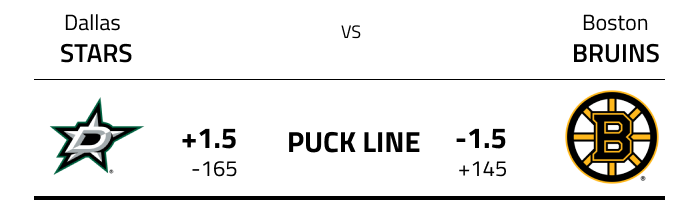
Standard Point Spread Line
The standard price to pay when betting on point spreads is (-110). This is the sportsbooks way of ensuring a profit no matter which side covers the spread. The extra 10 cents is also known as the 'juice' or 'vig' . Paying the extra 10-cents is like paying a tax or commission to the sportsbook for brokering the bet.
The -110 line means that in order for you to profit $100, you must wager $110. Some sportsbook offer something called 'reduced juice' , which means that you can still profit $100 but the risk is a few dollars less.
For example, if you see reduced lines such as -7.5 (-105), that means that you must risk $105 dollars in order to profit $100. If you see -7.5 (-102) then you must bet $102 in order to profit $100. It may not seem like a big deal at the time, but saving a few bucks each time over the course of the season can really help your bankroll.
Which brings me to my next point. If you are serious about getting into sports betting, it is vital to have more than one sportsbook to make a wager at. Shopping around for the best lines will help your bankroll, and you will be able to turn a bigger profit. If you see a pair of sneakers for $110 at one store, and the exact same pair is $102.99 at another store - which store are you buying them from?
Betting The Spread In Football
Doc's Sports is offering $60 worth of member's picks absolutely free - no obligation, no sales people - you don't even have to enter credit card information. You can use this $60 credit any way you please for any handicapper and any sport on Doc's Sports list of expert sports handicappers. Get $60 worth of premium members' picks free .