Rng Prediction Software
Posted By admin On 31/03/22- Rng Prediction Software
- Rng Prediction Software Download
- Rng Prediction Software App
- Rng Prediction Software Vs
From CFD-Wiki

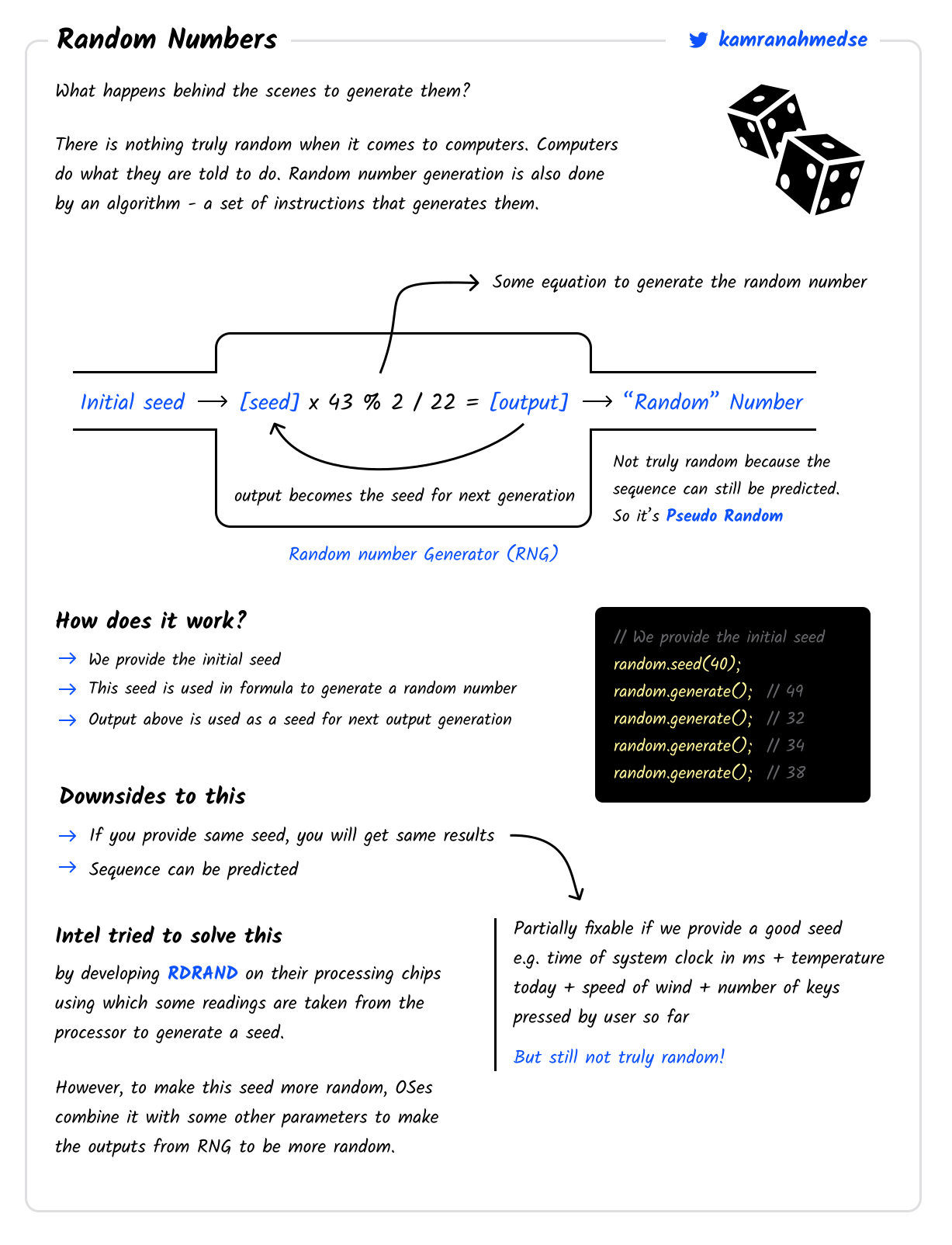
BetConstruct always puts a lot of time and effort into creating new igaming entertainment and extending its gaming portfolio. And by applying these best concepts and practices the software developer has developed a new game called Monti. Following the style of BetConstruct’s RNG Gaming Suite, this new instalment is geared towards quick betting. R/askscience: Ask a science question, get a science answer. At the start of the Pandemic, a lot of the concern was about the novelty of the virus and the fact that the majority of humans would most likely not have contacted a coronavirus and so the body wouldn’t know how to efficiently “fight” it. PX4 is the Professional Autopilot. Developed by world-class developers from industry and academia, and supported by an active world wide community, it powers all kinds of vehicles from racing and cargo drones through to ground vehicles and submersibles.
| Turbulence |
RANS-based turbulence models
|
| Large eddy simulation (LES) |
| Detached eddy simulation (DES) |
| Direct numerical simulation (DNS) |
| Turbulence near-wall modeling |
| Turbulence free-stream boundary conditions |


Introduction
The K-epsilon model is one of the most common turbulence models, although it just doesn't perform well in cases of large adverse pressure gradients (Reference 4). It is a two equation model, that means, it includes two extra transport equations to represent the turbulent properties of the flow. This allows a two equation model to account for history effects like convection and diffusion of turbulent energy.
The first transported variable is turbulent kinetic energy, . The second transported variable in this case is the turbulent dissipation, . It is the variable that determines the scale of the turbulence, whereas the first variable, , determines the energy in the turbulence.
There are two major formulations of K-epsilon models (see References 2 and 3). That of Launder and Sharma is typically called the 'Standard' K-epsilon Model. The original impetus for the K-epsilon model was to improve the mixing-length model, as well as to find an alternative to algebraically prescribing turbulent length scales in moderate to high complexity flows.
As described in Reference 1, the K-epsilon model has been shown to be useful for free-shear layer flows with relatively small pressure gradients. Similarly, for wall-bounded and internal flows, the model gives good results only in cases where mean pressure gradients are small; accuracy has been shown experimentally to be reduced for flows containing large adverse pressure gradients. One might infer then, that the K-epsilon model would be an inappropriate choice for problems such as inlets and compressors.
To calculate boundary conditions for these models see turbulence free-stream boundary conditions.
Usual K-epsilon models
Miscellaneous
Rng Prediction Software
References
[1] Bardina, J.E., Huang, P.G., Coakley, T.J. (1997), 'Turbulence Modeling Validation, Testing, and Development', NASA Technical Memorandum 110446.
[2] Jones, W. P., and Launder, B. E. (1972), 'The Prediction of Laminarization with a Two-Equation Model of Turbulence', International Journal of Heat and Mass Transfer, vol. 15, 1972, pp. 301-314.
[3] Launder, B. E., and Sharma, B. I. (1974), 'Application of the Energy Dissipation Model of Turbulence to the Calculation of Flow Near a Spinning Disc', Letters in Heat and Mass Transfer, vol. 1, no. 2, pp. 131-138.
Rng Prediction Software Download
[4] Wilcox, David C (1998). 'Turbulence Modeling for CFD'. Second edition. Anaheim: DCW Industries, 1998. pp. 174.